
27.1. REPAIR Dialogues with Maja Hojer Bruun
Cancelled due to illness. A new date will be announced soon.
Assistant Professor Maja Hojer Bruun (Aarhus University) will deliver an online presentation titled Mediators of Expertise: Brokers and the Transformation of Pedagogical Expertise in AI Edtech.
REPAIR Dialogues is a venue for scholars and collaborators of the REPAIR project to present their ongoing work and findings in a less formal manner. Each event includes a 30-40 minute introduction by a researcher or expert, followed by a joint discussion. The events are held online (via Zoom) in English.
Mediators of Expertise: Brokers and the Transformation of Pedagogical Expertise in AI Edtech
The talk is based on an article that draws upon ethnographic case-studies and anthropological theory and examines the often-overlooked role of brokers – individuals who mediate between technical development and educational contexts – in the evolving edtech (educational technology) industry. Drawing on ethnographic fieldwork in Denmark from the project Automated Expertise? (2023-2026), the analysis focuses on professionals such as schoolteachers, educational content developers and philosophers of technology who engage in startup ventures funded by national innovation schemes. In many non-Anglophone European educational contexts, where edtech development extends beyond major international tech firms (e.g. Kerssens & Dijck, 2021), local actors frequently serve as translators and validators of “domain knowledge” in edtech development, lending credibility to systems built primarily by engineers and data scientists with little prior experience in education.
The study contributes to the growing literature on edtech’s production cultures by interrogating how pedagogical expertise is represented, mobilized, instrumentalised, and transformed in the creation of educational technologies. In contexts where engineers move fluidly between fintech, health tech, and green tech, educational legitimacy often hinges on the inclusion of brokers who can speak to pedagogical or ethical concerns. Yet these figures occupy a paradoxical space: while their presence is essential to the marketability and institutional adoption of edtech, their roles are rarely formalised or sustained across projects.
Rather than viewing brokerage as a purely individualised or entrepreneurial function, I suggest attending to how these intermediaries prefigure new forms of labour, identity, and expertise in educational technology. Revisiting anthropological debates on brokerage, the article argues for a renewed attention to the embodied and situated practices through which edtech is made to matter. In doing so, it highlights how emerging configurations of labour, expertise, and value creation in edtech industries are shaped not only by technological affordances or state policies, but also by the contingent and relational work of those who broker between worlds.
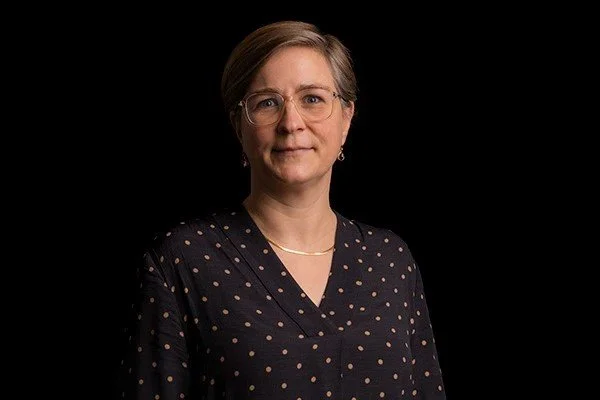
Maja Hojer Bruun is Associate Professor at the Department of Educational Anthropology and Educational Psychology, Danish School of Education, Aarhus University where she convenes the research programme Future Technology, Culture and Learning Processes. She received her PhD in Anthropology from the University of Copenhagen in 2012. She is the lead editor of the Palgrave Handbook of the Anthropology of Technology (2022) and has published extensively on emerging digital technologies, including information infrastructures, artificial intelligence, algorithmic governance, robotics, drones, and cryptographic systems, based on ethnographic research and practice-based interventions in real-life settings.
Hojer Bruun’s current research focuses on interprofessional collaborations and emerging forms of expertise involved in the development of automated and algorithmic systems among machine learning researchers, data scientists and AI provers, and in in hospitals, schools, universities and other public institutions. Her work also includes investigations into how generative AI and large language models are transforming academic practices and learning processes in higher education, particularly among students, teachers and researchers in the humanities and social sciences.